Wednesday, March 21, 2012

Blog Post Test Prep Homework: 3/21-4/16

Your homework filled with authentic reading and writing will counteract some of the test-preppy work we will be doing in class in the coming weeks...that way, you can look forward to your homework!  Right??

Your main homework during the weeks leading up to the state test will be reading and responding on your blog to practice the skills that will be required of you on the test.  We are not doing another vocabulary unit until after the test, so this will be your main homework.  You will be writing 6 blog posts over the course of 3.5 weeks.  All posts must be minimally 3 paragraphs.  They must all show that you understand how a focused, organized piece of writing goes: an introduction, specific observations and inferences, interpretation and extension.  Though they do not have to be as formal as your literary essay (meaning you can use first person), they need to be well written and use many of the skills you’ve acquired over the past few weeks. The requirements are described below:

2 posts on a narrative piece of writing

Respond to your independent reading book.  Pick 2 of the following questions to answer: 

Option A: How and why does your character change in the book? What specific evidence supports your ideas? How? What does this change teach you about life?
Option B: What is the theme the author is trying to convey through the story? How does he/she do this? How does it relate to life?
Option C: What kids of conflicts is your character facing? (include both internal and external). How is he or she handling them? What is your response to that? Can you relate at all?
Option D: Collect a few sentences that you think speak into life beyond the text.  Unpack them.  What do you think the author is saying to you as a reader through them?

2 posts on informational/nonfiction writing

Read an online news article (and include a link to it in your post) well.  All articles must be at least 6 paragraphs.  Follow the directions below when crafting your response:
Paragraph 1: Introduce the article by first providing a summary.
Paragraph 2: Explain the main idea that the author is trying to convey.  How do you know this? (hint: use actual quotes to back up your idea)
Paragraph 3: What is your personal response to what has been presented in the article? Why? Be sure to use elaboration and extend your ideas!

2 posts on poetry and/or song lyrics

Choose a poem or song that you would like to think more deeply about.  Use the following questions to formulate your post:

Paragraph 1: Introduce the poem with a brief summary.  Introduce what your thesis/theory is for the poem.
Paragraph 2: Support your theory/thesis with observations, inferences and interpretations
Paragraph 3: Extend your ideas into life

Extra Credit Post

Choose a genre that you have read yet and craft a thoughtful response that follows the same basic guidelines of all blog posts.

Wednesday, February 15, 2012

All Star Mentors: Finally Tallied!!

Apologies for the delay, but here are the class All Star Mentors, as nominated by YOU!

804/Gabi

806/A 3-Way Tie: Jacqueline, Nathan, Joanna

811/Leah

Congratulations!

Friday, February 3, 2012

This week's blog: respond to intentional detail as a film study student!


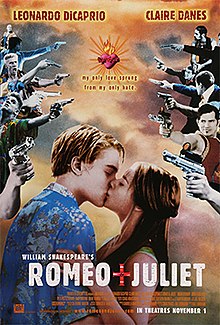
For this week, I want you to write a focused response to our viewing of Baz Luhrman's modern production Romeo and Juliet.  You may use your notes about the themes, class discussions or any online resources to help you.  Here is a slide show about different techniques used in the film that might help you:

http://www.slideshare.net/mcmrbt/romeojuliet-shot-by-shot


Possible topics if you are stuck: 
The use of color
The use of weather
A theme that stood out to you (from your notes)
Camera Angles

Monday, January 30, 2012

Prompts to help you get started on your post...

This post takes the same material that we covered earlier in the year--that I posted HERE--in question form, just in case you are having a hard time getting started on your posts each week. 

  • What is the major conflict of the book? How is it resolved? What theme or message does this reveal to the reader?
  • What are the strengths and weaknesses of the protagonist? How do they help or hinder him/her during the rising and falling action? What kind of emotional journey has your character had in the story?
  • What antagonistic forces seem to be working against the protagonist? How does the protagonist deal with them? Does he/she learn anything from them?
  • Have you come across a deep "loaded sentence" that requires unpacking? What does it mean?
  • If the setting is significant and symbolic, describe and unpack it.  Why do you think the author created this place to tell the story?
As always, please come during zero period if you need help developing your blog posts.

Tips for elaboration in paragraph two:
  • cite more than one piece of specific evidence that supports your idea
  • unpack the evidence thoughtfully: word choice, emphasis, figurative or symbolic choices

Thursday, January 19, 2012

Blog Post Assignment Due 1/25

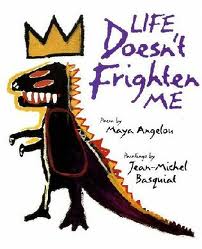
This week I want  you to continue with the thought process we have been working on all year (Observe+Infer, Interpret, Extend) and connect it to some of the visual arts work we have done in our poetry unit, including our study of Frida Kahlo's "Self Portrait on the Border" and the pairing of works by Jean-Michel Basquiat with Maya Angelou's "Life Doesn't Frighten Me."  Your job is to:


  •  Find a piece of visual art that you love and display it at the top of your post (use the button that looks like a picture when you write your post).  
  • Make observations about the work you chose.  What do you infer from them?  What do you think that the work is actually about based on them?
  • Turn these ideas into an organized blog post.  These steps are the same ones you should be following each week to meet standards anyway.  Remember: 
Paragraph 1: A lead, an introduction to the work, your theory
Paragraph 2: Evidence that supports your theory
Paragraph 3: Extension: how do you connect to this work? how does it connect to humanity? etc.

*as always, write more to exceed standards and check out mentors if you need help.
*don't forget that you are now commenting on at least TWO other posts per week!

Here are some online galleries that you can visit to find a piece of visual art that you love or find thought provoking.  Be sure to take your time to browse and explore so that you can find something you are excited about!

The Google Art Project takes you to amazing museums around the world. 
The Museum of Modern Art's (Manhattan) online collection
The Metropolitan Museum of Art's (Manhattan) online collection
The Brooklyn Museum's online collection

Extra credit: Along with  your post, write a poem in response to the piece of art.  It must incorporate at least three of the poetic devices that are on your sheet (that you are actively studying!) Name those devices in an introductory paragraph to your poem. 12 line minimum.


Wednesday, January 11, 2012

Assignment due Wednesday 1/18 instead of your regular post

Since we are working becoming a stronger community of readers, I want you to spend this week reading and commenting on other people's posts instead of you own.  You must comment on at least 3.  When you are done, you will create a post that nominates an "All Star Mentor." Your post must include the following:
  • Your nomination (a single post by a single author) with a LINK to the post
  • A paragraph explaining why you think that writer exemplifies the kind of blog/reading response writing we've been talking about all year. Be specific. 
This is a great opportunity to give a shout out to someone else's hard work...it doesn't happen often enough! 


Creating Better Community Through the Comment

Part of the reason why I love posting reading responses online rather than just having them live in your notebooks is because it enables us to easily share about our reading lives.  I believe that by reading one another's work, great things will happen.  For instance: 

  • You can get book recommendations
  • You can get into conversations about books you have read, too, or topics that are interesting to you
  • You will become a better writer because not only are you reading work, but you will begin to care more when you know that people are reading your work

So, in order to create a tighter knit reading and writing community, you are now required to create a "blog roll" (or "link list")  if you haven't already of the blogs that you want to keep up with regularly.  You are required to comment on at least 2 blog posts from your class weekly.  My hope is that you will get to know each other better as readers (and nonfiction writers) and that you will learn from one another. I will be checking these responses.

A good, thoughtful blog comment might:

  • praise interesting ideas in the original post, specifically (don't just say "nice job")
  • ask for clarification of any unclear parts of the original post
  • add the responder's own thoughts to original ideas to build strength
  • contradict or challenge (respectfully!) by explaining another aspect or asking a question to further dialogue
  • contain connections (to the self, the world, another text, or another part of the same text) to deepen thinking about the post
Sample starters: 

  • When you said __________ I thought________
  • I love the line ____________ because___________
  • When you said ____________ it got me thinking about________

***  AND good, thoughtful blog responses  always
  • are respectful
  • use standard vocab, spelling, and grammar (so that everyone can understand)
  • show consideration of the original blogger's work and thought

Here are some examples of some interesting conversations that got started last year: 


On girls reading boy characters
A poem based on Banksy's street art
A poem about death based on a painting by Gustav Klimt


(Sidenote: As I already see the eyes rolling, please remember that we are about to hit the half way point of 8th grade.  It makes sense that work would get more involved.  Also, please remember my advice to carry a positive attitude!)

Monday, December 26, 2011

Read more non fiction and be inspired at the same time.

One of my favorite magazines and online journals is Good.

They run a regular series called People Are Awesome and it's one of my favorites.  Feel free to read any of these stories and respond to them on your blog.

You're welcome.

Friday, December 16, 2011

Social Action Wrap Up/Nonfiction worth checking out


I have read and been inspired by a number of social action stories this week.  Here are links to read and discover on your own.  If you are moved by one, please write your next blog post in response.

Anonymous Donors Pay Off Kmart Layaways

Time Magazine names "The Protester" their Person of the Year.  Click HERE for a photo essay of 35 different protesters.  Click HERE to read the stories behind this choice.

Google just donated millions of dollars to help fight human trafficking. Read the story HERE.

Google's marketing campaign to raise awareness also includes a Slavery Footprint interactive tool for individuals to become educated on how people are contributing to modern day slavery.  Visit Slavery Footprint and check it out for yourself. 

Thursday, December 15, 2011

A Letter to 811

Dear 811,

Overall, I am impressed with the close-reading work you are doing--that means that you are looking at micro details and responding to them!

As you move forward, I want you to focus on trying to string some of those micro details together to come up with an overall theory.  Your theory can be your focus for the post and the micro details become the support for your theory.  This will also cause your writing to be a bit more formally organized.

Also remember to consider the "extension" aspect of reading: what is the author trying to say to you as a person? What is the story truly about (beyond the plot)?

Here are some All Star Mentors to visit this week for inspiration:

Eleni writes about big, interesting ideas in a super organized, focused way.  You should definitely read her posts if you need an example on how to have a theory and how to elaborate on it using both mico and macro details!

Delia's most recent post on Prep by Curtis Sittenfeld is a great example of writing around a theory or big idea.  Her title helps introduce what she is focused on.  (That is one way you can tell if you have ONE theory...does a clear title come to mind to introduce your work?)

I'm looking forward to reading your work in the coming weeks! Remember that as you challenge yourself with more sophisticated books, chances are you will have more interesting things to discuss.  This is a point in the year when some of you will want to consider weaning yourself off of Young Adult Literature and moving into some "bridge" or adult fiction!  We'll talk more about that in January.

Sincerely,
Ms. Robbins

A Letter to 806

Dear 806,

I feel like I need to write this letter to different halves of the class: the half who is actively writing thought provoking posts on their blogs and the half who has missed either one or both of the last two posts (or more).  You are such a smart class and it is disappointing to see students blowing off not only homework credit, but an opportunity to really think through your independent reading book.

Overall, for the people who *are* updating their blogs regularly, I am noticing readers picking out micro details and making inferences about them, which is great.  The next step is either writing LONG about those micro details or stringing a few together to come up with a theory.

Beyond writing long, I want you to focus on EXTENSION.  Remember our the "Process of Critical Thinking in Literature" display in our room.  This is the last part of the critical reading process. Ask questions like: Does this relate to me? people my age? What is the author trying to tell me about this? I will be looking for smart extension work for your next post.

Here are some All Star Mentors to inspire you to write.  I encourage you to read these posts and see what they are doing not only as writers, but what does it seem they are doing as active readers while in their books?

Nathan is reading Linchpin by Seth Godin,  a nonfiction book about creativity and wrote some seriously thought-provoking posts about it.  It inspired me to want to pick up the book!

Talyah wrote about the book Something Like Fate and had some really interesting thoughts about friendship.

Adam came up with some great theories about the character Jack in The Lord of the Flies. I would love to now hear a bit of extension...what do his thoughts and these characters teach us about people? Life? Leave him a comment with your opinion when you visit.

I'm looking forward to being inspired by your next round of posts!
Ms. Robbins

A Letter to 804

Dear 804,

As I've been reviewing your blogs, I've noticed some improvements.  Most of you are trying to write in paragraph form, many are including interesting titles and I noticed some interesting comments.  I want you to continue to grow as writers, though, so here are some updates for you  and some examples of All-Star-Mentors...people in your class who are doing their reading response/blog work really well.  


  • Most importantly, your blog needs to be about a theory you have about your book.  This is designed to build on what we covered in our very first unit.  I would now like for you to check back at this post every week and choose one of the 9 options to try out for you post.  Include the option you are trying out as a label to your post.  
  • Remember, retell should only be used to give context for your ideas.  I do actually read your posts:) I can tell if you just wrote three paragraphs of retell!  
  • Please, please write with an academic tone.  It can still be personal, but the work you post should represent your best self: capitalization, underlining or italicizing titles, etc.  
All Star Mentors from 804: 

Anouk did a great job about writing a post about Tina Fey's Bossypants that encourages conversation! She pulled out something that made her think deeply and wrote about it in an engaging way. 

I challenged Mark to write a blog post explaining why so many 8th graders still love the Diary of a Wimpy Kid series, even though it's below your reading level.  He did a great job explaining and if you read all of his posts you can tell that he takes time to think of a thought-provoking topic.  

I am looking forward to reading posts that challenge me to look at the world in a different way or open my eyes to new insight! 

Sincerely, 
Ms. Robbins

Wednesday, November 9, 2011

Blog Reflection Week!


This week is dedicated to looking back on your first four posts and reflecting as a writer.  How can you improve your writing about reading?  This post goes hand in hand with the paper that you will fill out and return to me about what you learned from this experience.

Good blogging habits:
  •          Are you crafting interesting titles that make someone want to read your post?
  •          Do you mention “spoiler alert” if you are going to give away the ending?
  •          Are you remembering to use good grammar: spelling, capitalization, underline or italicize titles, etc.
  •          Are you commenting on other people’s blogs? It is now a part of your weekly blogging responsibility to comment at least once a week.  Have a blog roll of people who you want to read on the side of your blog.  Make sure your display name is your first name and last initial so you can get credit.
Good writerly habits:
  •          Do you include context so that the reader doesn’t feel like he/she is jumping into something half way through? (context should be 2-3 sentences in the first paragraph and include the title, author, character, setting and conflict)
  •          Are you including too much retell? Your blog posts aren’t a review of a book or a blurb on the back cover.  Your post should be focused an interesting idea that you want to unpack and share. 
  •         Are your blog posts focused? Concentrate on one idea (a character, a theme, a line, etc.)
  •          Are you using paragraphs? At minimum, you should have an “introduction” paragraph, an “observe/infer/interpret” paragraph and an “extension” paragraph.  These show me that you can write for an audience, that you are doing deep thinking work in your book, and that you are seeing how literature relates to life. 
Good examples: Check out these mentors to see what you can learn from them. You will be choosing one to focus on for your next blog post. 

Ana did a great job making her book relateable to her reader, whether they read the book or not.  Notice how she "bookended" her post to get the reader interested and to leave them thinking.

Layla did a great job structuring her post, making me think and now I want to read Fight Club!

Tori shows how to write a post on unpacking a line and does a great job making the reader think!

Gabi's posts are great examples of the Introduction/Observe+Infer+Interpret/Extension structure!

Sophie's posts are passionate and thought provoking.

Thursday, November 3, 2011

Finding Quality Research for Your Social Action Picture Book

Your job in the lab today is to find and print out research on your social action topic so that you can be an informed, educated author who children and trust and believe.  You should have your completed K/W chart and directions in front of you.  This blog post is meant to be an online guide.

1. Revisit the blog post we used for our general social action webquest. Many of those websites will lead you to organizations whose own website has an "overview" that can serve as an article, specific case studies you may want to print and read or even additional websites to check out.

2. Visit M.S. 51's Library Homepage. "Worldbook" may have a great overview for you, "Proquest" may guide you toward interesting articles and "Opposing Viewpoints" might be an interesting read if your topic is controversial (it will show you both sides).  I will have the passwords on the board in the lab.

3. Finally, try a search engine like "google" or "ask." (Remember that these ARE NOT WEBSITES.  You cannot cite "google" on a bibliography.) Use key words about your topic to help you  narrow down all that is on the world wide web: words like "organization," or "nonprofit" alongside your topic may help you get to a website that has solid overviews. 

REMINDERS:
  • Make sure your research in CURRENT (the article is from the past few years).  
  • Print only what you will READ--it is ok to copy and paste the parts that are relevant to you onto a Word document.  
  • As a back up, save your documents in googledocs OR send yourself an email of the websites you are using (have an open email to yourself and just copy and paste the link in the body of the email), just in case!
  • Staple all articles to your K/W paper.  We will begin our reading in class together.  
  • You will be creating a bibliography for your picture book, so you MUST write down the source of the information.